Key Factors to Consider When Choosing Galvanized Iron Wire for Projects
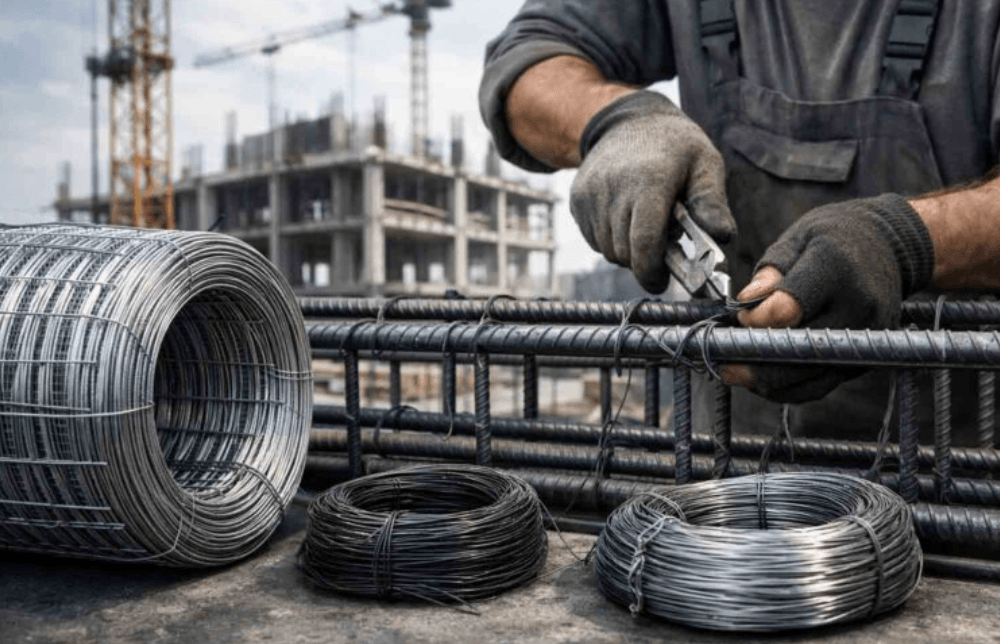
A farm boundary, construction site, cable protection system, garden enclosure, and industrial mesh each place different demands on Galvanized Iron Wire. Consider whether it will hold tension, secure components, form a barrier, support plants, or become part of a fabricated product. The application determines the required diameter, strength, flexibility, and coating.
Do not select a product because it is commonly used elsewhere. Match its properties to conditions, design requirements, and service life. Also consider whether the wire will be used continuously or only for a temporary installation, since this affects the specification and procurement quantity.
Evaluate the Zinc Coating
The zinc layer protects the steel from surrounding moisture and slows corrosion. A project exposed to rain, irrigation, damp soil, or coastal air may need a heavier coating than an indoor application. Ask for the galvanizing method and coating specification rather than relying on a general product description. Appropriate protection can reduce premature rusting, replacement work, and maintenance. Ask how coating thickness is measured and whether the supplier can provide batch-level results.
Select the Correct Wire Diameter
Diameter affects strength, handling and the finished structure. Thicker wire may be suitable where greater rigidity is required, while smaller sizes can work for tying, binding and lighter fabrication. The right choice depends on design, spacing, tension and expected loads. Confirm measurements in millimeters or the relevant gauge system, since gauge numbers can be confusing. Consistent diameter also supports smooth machine operation and uniform mesh openings, ties, and products.
See also: Building a Resilient Business in a Changing Market
Check Tensile Strength and Flexibility
Tensile strength indicates how much force a wire can withstand before breaking. It matters in tensioned fencing and industrial fabrication. However, maximum strength is not the only consideration. Some tasks require bending, twisting, or wrapping without cracking. Binding operations need workable flexibility, while long boundary spans require enough strength to resist pulling forces. If machinery will process the wire, confirm that its strength and ductility suit forming, twisting, or weaving.
Choose Between Hot-Dip and Electro-Galvanizing
Hot-dip galvanizing passes steel wire through molten zinc and generally creates a thicker protective layer for demanding outdoor exposure. Electro-galvanizing applies zinc through an electrical process and usually creates a thinner, even finish. It may suit applications where appearance matters, and exposure is less severe. Choose based on environment, coating requirement, budget, and applicable specification. Ask the manufacturer which process is used and request relevant test information.
Inspect Surface Finish and Coating Uniformity
Look for bare patches, peeling, roughness, inconsistent color, damaged areas, and rust. The surface should be even and appropriate for the intended use. A poor finish can affect handling, appearance and corrosion protection. On mesh or fencing, uneven coating may be noticeable across a large installation. Request samples when appearance or fabrication quality is important. Visual checks do not replace technical testing, but they can identify obvious concerns before material is accepted.
Consider the Working Environment
Outdoor installations may face rain, humidity, sunlight, soil contact, pollution, or chemicals. Agricultural settings can involve fertilizers and irrigation water, while industrial locations may contain airborne contaminants. Coastal projects need particular care because salt can accelerate corrosion. Identify whether the wire will be sheltered, exposed, buried, or in contact with other materials. More demanding environments make appropriate corrosion protection and manufacturer installation guidance especially important.
Confirm Standards, Testing and Documentation
Ask which product standards apply to the intended use. Specifications may cover diameter tolerances, coating requirements, tensile properties, and test methods. Request a technical data sheet, batch details, and available inspection certificates. Ensure documents relate to the product and consignment being purchased. For regulated or safety-critical work, ask the project engineer to confirm the applicable standard.
Assess Supplier Capability and Consistency
A dependable supplier should explain product options, specifications, manufacturing controls, and delivery arrangements. Ask for a written confirmation before approving the final order. Ask whether the required diameter, coating, and coil size can be maintained across repeat orders. Buyers comparing a GI wire supplier in Karnataka should also consider technical support, communication, dispatch planning, and how quality concerns are handled. Do not rely on price alone: inconsistent material can cause delays, processing problems, and early replacement.
Compare Total Project Cost
Purchase price is only one part of the expense. A suitable coating may cost more initially but reduce repairs and replacement. Conversely, an unnecessarily heavy or high-strength product can raise costs without improving performance. Compare quotations on an equivalent basis, including diameter, coating, tensile properties, packing and quantity. This helps procurement teams balance budget limits with technical requirements. Include likely wastage when calculating the quantity, particularly where cutting and forming are part of the work.
Plan Storage, Handling and Installation
Store coils off the ground in a dry, ventilated area, away from standing water, mud and corrosive chemicals. Handle them carefully to prevent kinks, abrasion and zinc-coating damage. During installation, use suitable tools and avoid unnecessary scraping, sharp bends or excessive tension. Follow project drawings and manufacturer guidance for spacing and joining. Inspect deliveries, record batch information before installation. Careful handling preserves the protection and performance expected from the product.
Make a Specification-Led Decision
Bring the selection factors together before requesting quotations. Define the application, environment, dimensions, mechanical properties, coating, standards, quantity, and delivery schedule. Share the same specification with each supplier to compare proposals fairly. Clarify product descriptions and involve the project engineer where performance or safety is critical. This creates a useful record for inspection, installation, and future purchasing.
Conclusion
Selecting the right wire requires more than checking price or appearance. Project conditions, zinc coating, diameter, tensile strength, flexibility, manufacturing consistency, and supplier support all influence the result. Confirm specifications, review documents, inspect deliveries, and store material carefully. By evaluating these details before procurement, teams can choose Galvanized Iron Wire that suits the application, supports dependable installation, and offers lasting value across construction, agriculture, and industrial projects.
Supporting diverse industrial and infrastructure requirements through quality-focused steel manufacturing and product expertise, Sunvik Steels Pvt. Ltd. manufactures GI wire and a range of WirePro products for construction, fencing, agriculture and industrial applications. Their portfolio includes wire rods, HB wire, GI wire, binding wire, welded mesh, chain link, barbed wire, annealed wire, and razor wire. With in-house wire rod production, quality-focused processes, technical support, and planned deliveries, Sunvik supports projects requiring dependable wire solutions for diverse applications.